Sinds 2024 heeft PriceRadar miljoenen bezoekers geholpen de beste producten tegen de beste prijzen te vinden.
PriceRadar is volledig onafhankelijk en gratis te gebruiken. Onze visie is om uw go-to site te zijn waarop u altijd kunt rekenen bij het vergelijken van producten en prijzen.
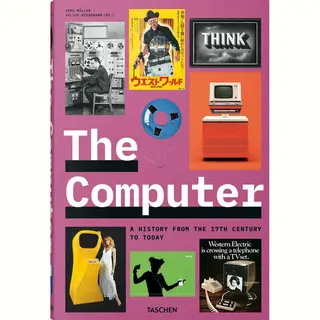
The book is a short history of the computer industry, starting with relay computers and ending with the IBM PC, introduced in 1981. Before digital computers, there were digital switching systems, used by the phone companies. With the earliest digital computers, users found them to be just too slow, and vacuum tubes were mainly used in analog devices, like radios. But soon digital counters were invented, showing that vacuum tubes had digital uses also. But vacuum tubes had their own problems, producing too much heat and failing at random. Vacuum tube computers also used too much electric power and too much floor space. In 1947, a new device was invented that would solve those problems. It was the transistor, invented at Bell Labs by Shockley, Bardeen and Brattain. In a few years, computer companies were starting to use transistors in their newest machines. By 1955, just about all of them had given up on vacuum tubes and switched to transistors. Then integrated circuits were invented, allowing many transistors to be included on one chip. Before the IBM PC, almost anyone who used a computer used it remotely, connecting with a phone line or a cable. Batch processing was the other option. The book is a short history of the computer industry, starting with relay computers and ending with the IBM PC, introduced in 1981. Before digital computers, there were digital switching systems, used by the phone companies. With the earliest digital computers, users found them to be just too slow, and vacuum tubes were mainly used in analog devices, like radios. But soon digital counters were invented, showing that vacuum tubes had digital uses also. But vacuum tubes had their own problems, producing too much heat and failing at random. Vacuum tube computers also used too much electric power and too much floor space. In 1947, a new device was invented that would solve those problems. It was the transistor, invented at Bell Labs by Shockley, Bardeen and Brattain. In a few years, computer companies were starting to use transistors in their newest machines. By 1955, just about all of them had given up on vacuum tubes and switched to transistors. Then integrated circuits were invented, allowing many transistors to be included on one chip. Before the IBM PC, almost anyone who used a computer used it remotely, connecting with a phone line or a cable. Batch processing was the other option.
Beoordelingen
0,0
Nog geen beoordelingen
Wees de eerste die een ervaring deelt over dit product!